

Hard water can create many household problems, from mineral buildup on faucets to dull laundry and inefficient appliances. A water softener solves these issues by removing excess minerals like calcium and magnesium. However, like any home system, it needs regular care to stay effective.
Learning how to clean and maintain water softener systems properly helps ensure consistent performance, better water quality, and a longer system lifespan. Fortunately, the process is straightforward and only requires occasional attention.
In this guide, we’ll walk through practical steps homeowners can follow to keep their water softener running smoothly.
Why Water Softener Maintenance Matters
Many homeowners install a water softener and then forget about it. While these systems require less maintenance than many other appliances, neglect can lead to several issues.
Regular maintenance helps:
- Prevent salt bridges and blockages
- Maintain efficient resin performance
- Improve water quality throughout the home
- Extend the life of the system
- Reduce costly repairs
When you understand how to clean and maintain water softener units, you protect your investment and keep your household water consistently soft.
How to Clean and Maintain Water Softener Systems
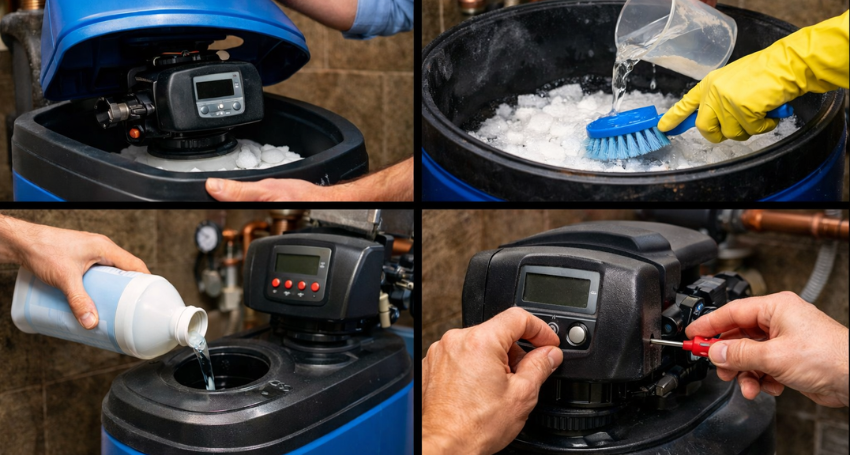
Routine care usually involves cleaning the brine tank, checking salt levels, and occasionally sanitizing the system. These steps help ensure the softener continues removing hard minerals efficiently.
1. Check and Refill the Salt Level
Salt plays a critical role in the softening process. The system uses salt during regeneration to recharge the resin beads that remove hardness minerals.
Follow these simple tips:
- Check the salt level at least once a month
- Keep the tank at least one-third full
- Avoid filling the tank completely to the top
- Use high-quality water softener salt
Low salt levels can reduce the system’s ability to soften water effectively. Therefore, regular checks are one of the easiest ways to maintain your system.
2. Break Up Salt Bridges
Over time, moisture can cause salt to form a hard crust called a salt bridge. This barrier prevents salt from dissolving properly, which disrupts the regeneration cycle.
To fix this problem:
- Use a broom handle or long tool.
- Gently break the hardened layer.
- Remove any large chunks of salt.
Checking for salt bridges should become part of your routine when practicing how to clean and maintain water softener equipment.
3. Clean the Brine Tank
Although the brine tank doesn’t need frequent cleaning, buildup can occur after months of use.
A deep cleaning every 6–12 months keeps the tank working efficiently.
Steps to clean the brine tank:
- Turn off the water softener.
- Remove remaining salt from the tank.
- Wash the tank with warm water and mild dish soap.
- Rinse thoroughly.
- Refill with fresh salt.
This process removes residue, dirt, and mineral buildup that may interfere with performance.
4. Clean the Resin Tank
The resin tank contains small beads that capture minerals from hard water. Over time, iron, sediment, and other contaminants may coat the resin beads.
Using a resin cleaner helps restore their effectiveness.
Simply add the cleaner according to the manufacturer’s instructions and run a regeneration cycle. This step improves the system’s ability to soften water and prevents long-term damage.
When learning how to clean and maintain water softener systems, resin care plays a key role in maintaining water quality.
5. Sanitize the System
Sanitizing helps eliminate bacteria that may develop inside the tank. While this isn’t necessary every month, occasional sanitation ensures the system remains hygienic.
You can sanitize your water softener by:
- Adding a small amount of household bleach to the brine tank
- Running a regeneration cycle
Always follow the manufacturer’s recommendations when sanitizing the system.
Signs Your Water Softener Needs Maintenance
Even with regular care, problems can still occur. Recognizing the warning signs early prevents bigger issues.
Look for these indicators:
- Soap doesn’t lather easily
- White mineral spots on dishes or fixtures
- Stiff laundry after washing
- Reduced water pressure
- Salt levels are not decreasing in the tank
These symptoms often indicate that the system needs cleaning or adjustment. Acting quickly keeps your water softener working efficiently.
How Often Should You Maintain a Water Softener?
Most homeowners only need to perform basic maintenance a few times each year.
A simple schedule includes:
Monthly
- Check salt levels
- Inspect for salt bridges
Every 6–12 months
- Clean the brine tank
- Use resin cleaner
- Sanitize the system
With this routine, learning how to clean and maintain water softener systems becomes quick and manageable.
Professional Water Softener Service
While homeowners can handle basic maintenance, professional inspections provide additional peace of mind. Experts can test water quality, inspect valves, and ensure every component operates correctly.
If your system shows signs of inefficiency or hasn’t been serviced in years, professional maintenance can restore optimal performance.
Companies like CFWSLLC specialize in water treatment solutions that help homeowners maintain reliable, high-quality water systems. Professional service ensures your equipment continues delivering soft, clean water throughout your home.
Conclusion
Understanding how to clean and maintain water softener systems helps homeowners avoid common hard water problems while extending the life of their equipment. With routine salt checks, occasional tank cleaning, and periodic sanitation, your system can operate efficiently for many years.
If you want expert guidance or professional maintenance, the team at CFWSLLC can help. Their specialists provide reliable water treatment solutions designed to keep your home’s water system performing at its best. Contact us to ensure your water softener stays clean, efficient, and ready to deliver high-quality water every day.