

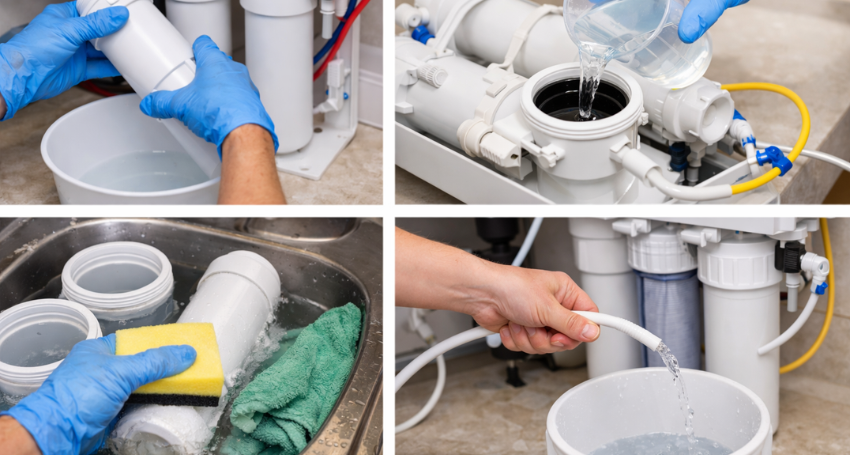
If you rely on purified water at home or work, knowing how to clean a reverse osmosis system is essential. While RO systems deliver high-quality drinking water by removing contaminants, they also require regular maintenance to perform at their best. Without proper cleaning, bacteria can grow, filters can clog, and water flow can slow down.
Fortunately, maintaining your reverse osmosis (RO) system isn’t complicated. With the right steps and a consistent schedule, you can extend the life of your system and protect your water quality. Let’s walk through everything you need to know in this blog.
Why Learning How to Clean a Reverse Osmosis System Matters
Reverse osmosis systems filter out sediment, chlorine, heavy metals, and other impurities. However, over time, those contaminants accumulate inside the filters and housing. As a result, the system works harder, efficiency drops, and the water taste may change.
Regular cleaning provides several benefits:
- Improves water quality and taste
- Prevents bacterial growth
- Maintains proper water pressure
- Extends membrane life
- Reduces costly repairs
Because RO systems are an investment in your health and home, routine maintenance protects that investment.
How Often Should You Clean an RO System?
Understanding how to clean a reverse osmosis system also means knowing when to do it.
In general:
- Pre-filters and carbon filters: Replace every 6–12 months
- RO membrane: Replace every 2–3 years
- Full system sanitization: Once a year or during filter changes
However, water quality and usage levels may affect this schedule. If you notice reduced water flow, unusual taste, or strange odors, it’s time to inspect and clean the system.
How to Clean a Reverse Osmosis System Step by Step
Now, let’s break down the process in a simple, clear way.
1. Turn Off the System
First, shut off the water supply valve connected to the RO system. Then, turn off the storage tank valve. Open the faucet to relieve pressure and drain remaining water.
This step prevents leaks and ensures safe cleaning.
2. Remove and Replace Filters
Next, carefully unscrew the filter housings using a filter wrench. Remove old sediment and carbon filters. Dispose of them properly.
At this stage, many homeowners combine filter replacement with system sanitization. That approach saves time and ensures thorough maintenance.
3. Sanitize the System
To properly address how to clean a reverse osmosis system, sanitization is critical.
Follow these steps:
- Add a food-grade sanitizer or unscented household bleach (manufacturer-recommended amount) into the empty filter housing.
- Reassemble the housing without the filters.
- Turn the water supply back on briefly to allow the housing to fill.
- Let the solution sit in the system and storage tank for about 20–30 minutes.
This process disinfects the internal tubing and the storage tank.
4. Flush the System
After sanitizing, drain the entire tank by opening the faucet. Then, close it and allow the tank to refill with clean water. Flush again.
Flushing removes any remaining cleaning solution and ensures your drinking water remains safe.
5. Install New Filters and Membrane (If Needed)
Once the system is sanitized and flushed, install new filters. If your membrane is due for replacement, install it according to the manufacturer’s instructions.
Finally, turn all valves back on and check for leaks.
Common Mistakes to Avoid
Even when homeowners understand how to clean a reverse osmosis system, small mistakes can affect performance.
Avoid these common issues:
- Skipping annual sanitization
- Forgetting to flush after cleaning
- Using harsh chemicals not approved for RO systems
- Overtightening filter housings
Consistency and proper technique make a significant difference.
Signs Your RO System Needs Immediate Attention
Sometimes, waiting for your regular maintenance schedule isn’t enough. Look out for these warning signs:
- Slow water flow
- Cloudy water
- Unusual taste or odor
- Noisy system operation
- Leaks under the sink
If you notice any of these issues, it’s wise to inspect or clean the system promptly.
When to Call a Professional
While many homeowners handle basic maintenance, some situations require expert assistance. For example, persistent leaks, pressure problems, or recurring water quality issues may indicate deeper system concerns.
Professional water treatment specialists can:
- Test your water quality
- Inspect system components
- Replace membranes correctly
- Ensure optimal system performance.
If you want peace of mind, partnering with experienced professionals can help maintain long-term reliability.
Conclusion
Learning how to clean a reverse osmosis system empowers you to maintain safe, great-tasting water year-round. However, proper maintenance goes beyond simple cleaning. System sizing, installation quality, and routine inspections all influence performance.
At CFWSLLC, we specialize in water filtration solutions designed for both residential and commercial properties. Whether you need expert maintenance, filter replacement, or a complete system evaluation, our team ensures your reverse osmosis system runs efficiently and safely.
If you’re unsure about your maintenance schedule or want professional support, contact us to schedule a service consultation. Clean water starts with proper care, and we’re here to help every step of the way.