

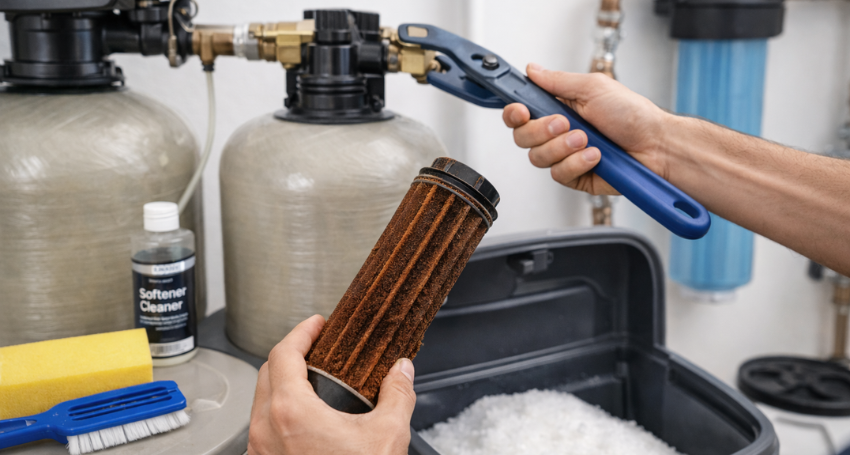
Hard water can quietly cause problems throughout your home, from scale buildup in pipes to dull laundry and inefficient appliances. That’s why many homeowners rely on a water softener system to protect plumbing, improve water quality, and extend appliance life. However, owning a system is only the first step. Understanding how to care for water softener system components properly ensures you get consistent performance and long-term value.
If you’ve ever wondered whether your unit needs maintenance or how often you should check it, this guide will walk you through the essentials in a simple and practical way.
Why Knowing How to Care for a Water Softener System Matters
A water softener works by removing minerals like calcium and magnesium from your water supply. Over time, these minerals accumulate in the system, which can reduce efficiency if left unchecked. Regular maintenance keeps the unit functioning properly and prevents costly repairs.
In addition, a well-maintained water softener improves water pressure, reduces soap usage, and helps appliances like dishwashers and water heaters last longer. Therefore, routine care is not just about maintenance, it’s about protecting your entire home.
Check Salt Levels Regularly
One of the easiest and most important tasks when learning how to care for water softener system units is monitoring salt levels. The brine tank should usually remain at least half full, depending on usage.
How Often Should You Check?
Inspect the salt level every month. If you notice the salt forming a hard crust, known as a salt bridge, break it carefully with a broom handle or similar tool. This allows proper regeneration and keeps the system running efficiently.
Also, choose high-quality water softener salt to reduce residue and prevent buildup inside the tank.
Clean the Brine Tank Periodically
Even with quality salt, residue and sediment can accumulate over time. Cleaning the brine tank once or twice a year helps prevent clogs and keeps the resin beads functioning effectively.
First, empty the tank and rinse it with warm water. Then, use a mild soap solution to remove grime. After rinsing thoroughly, refill the tank with fresh salt and restart the system according to the manufacturer’s instructions.
This simple step can dramatically improve performance and prevent maintenance issues later.
Inspect the Resin Bed for Performance Issues
The resin bed is the heart of your water softener system. It captures hardness minerals and releases sodium during regeneration cycles. If water starts feeling hard again, the resin may need attention.
Signs the Resin Bed Needs Maintenance
- Spotty dishes and cloudy glassware
- Soap is not lathering properly
- Scale buildup around faucets
- Reduced efficiency despite regular salt refills
In many cases, a resin cleaner can restore functionality. However, if the issue persists, professional inspection may be necessary.
Watch for Plumbing and Valve Leaks
Another key aspect of understanding how to care for water softener system equipment involves visual inspections. Every few months, check surrounding pipes, fittings, and control valves for leaks or corrosion.
Small leaks may seem minor at first, but they can reduce efficiency and increase water bills. Catching these problems early helps maintain optimal performance and prevents larger repairs.
Use the Right Settings for Your Household
Many homeowners overlook system settings after installation. However, water usage patterns can change over time. Adjusting regeneration schedules based on your household size and water consumption helps maximize efficiency.
For example, a large family may require more frequent regeneration, while smaller households may benefit from reduced cycles. Reviewing settings annually ensures your system operates as efficiently as possible.
Schedule Professional Maintenance When Needed
While many maintenance tasks are simple, professional servicing remains important. Experts can inspect internal components, test water hardness levels, and ensure everything operates correctly.
Companies like CFWSLLC offer professional support that helps homeowners avoid unexpected breakdowns and maintain reliable water quality year-round.
How to Care for a Water Softener System for Long-Term Savings
Consistent care saves money in multiple ways. You’ll reduce energy consumption, lower appliance repair costs, and improve water heater efficiency. Additionally, soft water helps extend the lifespan of plumbing fixtures and prevents mineral scale buildup throughout the home.
Because of these benefits, spending a few minutes each month on maintenance can result in significant long-term savings.
When to Consider Upgrading Your System
Even with proper maintenance, older systems may eventually lose efficiency. If your unit frequently requires repairs or struggles to keep up with your household’s needs, upgrading may be a smart investment.
Modern water softener systems offer improved regeneration technology, smart monitoring features, and better salt efficiency. Consulting a trusted professional can help determine if replacement makes sense for your home.
Partner With Experts for Cleaner, Softer Water
Taking the time to learn how to care for water softener system components ensures your home continues to receive clean, soft water every day. However, professional guidance can make maintenance easier and more effective. If you want expert advice, system inspections, or reliable water treatment solutions, contact us. Their experienced team can help you maintain your system, improve water quality, and keep everything running smoothly for years to come.
Conclusion
Knowing how to care for water softener system components is essential for maintaining consistent water quality and protecting your home from the effects of hard water. With regular maintenance tasks like monitoring salt levels, cleaning the brine tank, checking for leaks, and adjusting settings when needed, your system can run efficiently for many years. In addition, proactive care helps reduce repair costs, improve appliance performance, and enhance everyday comfort. By combining simple routine checks with professional support when necessary, homeowners can enjoy cleaner water, longer-lasting plumbing, and peace of mind knowing their water softener system is performing at its best.