
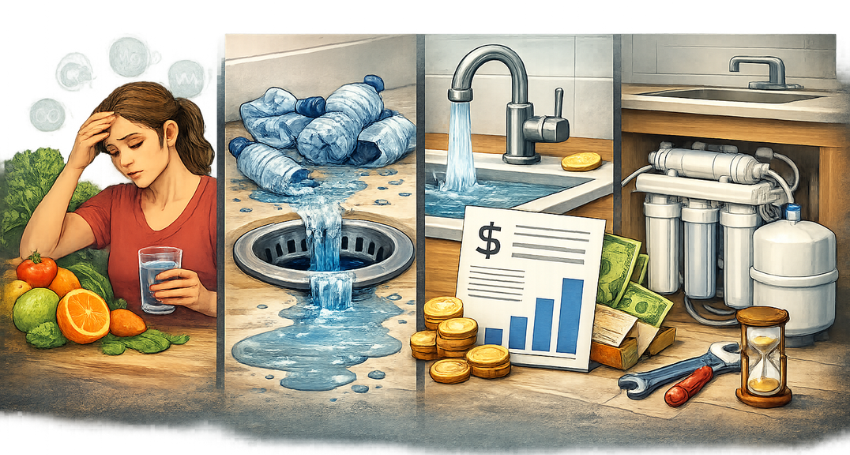
When homeowners seek clean, safe drinking water, reverse osmosis (RO) systems often top the list. These systems remove contaminants effectively and improve water taste. However, many people still ask: What are the cons of reverse osmosis water?
While reverse osmosis offers impressive filtration, it’s not without its drawbacks. Understanding both sides helps you make a more informed decision, especially when choosing a system for your home or business through a trusted provider like CFWSLLC.
Let’s explore the lesser-known disadvantages of reverse osmosis water in this blog so you can decide if it truly fits your needs.
What Are the Cons of Reverse Osmosis Water?
1. Removal of Beneficial Minerals
Reverse osmosis doesn’t just filter harmful contaminants, it also removes beneficial minerals like calcium, magnesium, and potassium.
These minerals naturally occur in water and contribute to both taste and health benefits. Without them, RO water can taste “flat” or less refreshing.
Many modern systems address this issue with remineralization filters, but not all setups include them by default. If you’re considering installation, it’s important to ask about this feature.
2. Water Waste During Filtration
One of the most common concerns when asking what are the cons of reverse osmosis water is water waste.
RO systems use a multi-stage filtration process that produces wastewater as a byproduct. For every gallon of purified water, several gallons may go down the drain.
Although newer, high-efficiency systems have improved ratios, water waste remains a factor, especially in areas where water conservation matters.
3. Slower Filtration Process
Unlike standard filtration systems, reverse osmosis works gradually.
RO systems store filtered water in a tank because the filtration process itself is not instant. This means you might experience slower water flow compared to traditional taps.
For larger households or businesses, this can sometimes feel inconvenient, especially during peak usage times.
4. Higher Initial and Maintenance Costs
Another important consideration when evaluating what are the cons of reverse osmosis water is cost.
While RO systems provide high-quality water, they often come with:
- Higher upfront installation costs
- Regular filter replacement expenses
- Occasional maintenance or servicing
Filters typically need replacement every 6–12 months, depending on usage and water quality. Neglecting maintenance can reduce system efficiency and water quality.
5. Requires Professional Installation
Reverse osmosis systems are more complex than basic filters.
They often require professional installation to ensure proper performance and avoid leaks or pressure issues. This adds to the initial investment but ensures long-term reliability.
Working with experienced providers like CFWS LLC ensures your system is installed correctly and optimized for your water conditions.
6. Potential for Slightly Acidic Water
Because RO systems remove minerals, the resulting water can become slightly acidic.
While this isn’t harmful in most cases, it can affect plumbing over time if not balanced properly. Again, remineralization filters help correct this issue, but they must be included in your setup.
Are These Cons Deal-Breakers?
Not necessarily.
When evaluating what are the cons of reverse osmosis water , it’s important to consider your specific situation. For many households, the benefits like removing harmful contaminants, improving taste, and ensuring safer drinking water outweigh the drawbacks.
However, the key lies in choosing the right system and ensuring it’s customized for your needs.
How to Minimize the Drawbacks of Reverse Osmosis
Fortunately, many of the disadvantages can be reduced with the right approach:
Choose a System with Remineralization
This restores essential minerals and improves water taste of water.
Opt for High-Efficiency Models
Modern RO systems reduce water waste significantly.
Schedule Regular Maintenance
Timely filter changes keep your system running efficiently.
Work with Experts
Professional guidance ensures you get a system tailored to your home or business.
Why Choosing the Right Provider Matters
Understanding what are the cons of reverse osmosis water is only part of the equation. The real difference comes from how the system is designed, installed, and maintained.
At CFWS LLC, the focus goes beyond just selling a system. The goal is to provide customized water solutions that:
- Fit your specific water quality
- Improve efficiency
- Reduce long-term costs
- Deliver consistent, reliable performance
With expert support, many of the common drawbacks of reverse osmosis can be minimized or even eliminated.
Final Thoughts
Reverse osmosis remains one of the most effective water purification methods available today. Still, asking what are the cons of reverse osmosis water is essential before making a decision.
Yes, there are downsides like mineral removal, water waste, and maintenance requirements. But with the right system and professional support, these issues become manageable.
If you’re considering a reverse osmosis system but want to avoid common pitfalls, it’s worth speaking with professionals who understand both the benefits and the challenges.
CFWSLLC can help you choose and install a system tailored to your needs, ensuring you get clean, great-tasting water without unnecessary drawbacks. Contact us to explore your options and take the next step toward better water for your home or business.