
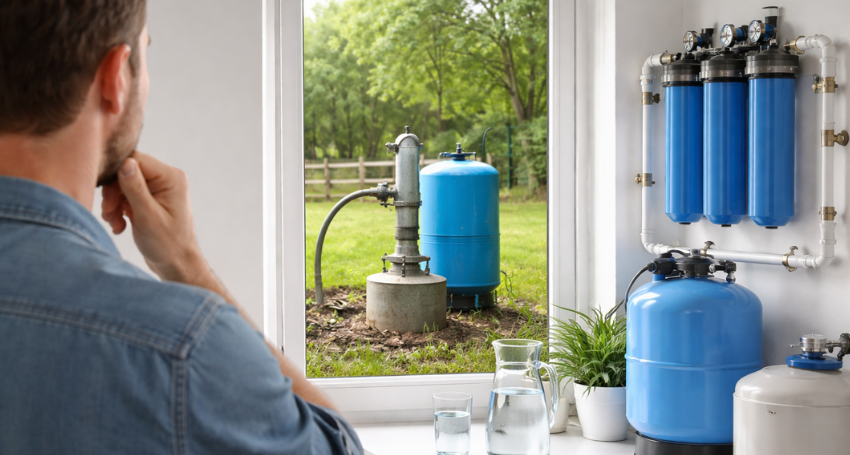
If your home relies on a private well, you’ve probably asked yourself: Do I need a water filtration system for well water? It’s a smart question and one that every well owner should consider carefully.
Unlike municipal water, well water isn’t treated by a city system. That means the responsibility for water safety falls entirely on you. While well water can be naturally clean and refreshing, it may also contain hidden contaminants that affect your health, plumbing, and appliances.
Let’s break down in the blog when filtration is necessary, what risks to watch for, and how the right system can protect your home.
Understanding What’s in Your Well Water
Well water comes directly from underground sources, which makes it vulnerable to environmental factors. Soil composition, nearby agriculture, and even aging plumbing can influence what ends up in your water.
Common contaminants found in well water include:
- Sediment (sand, silt, and dirt)
- Iron and manganese
- Hard minerals like calcium and magnesium
- Bacteria and viruses
- Nitrates from fertilizers
- Sulfur (causing that “rotten egg” smell)
Because these elements vary by location, no two wells are the same. That’s why testing is the first and most important step.
Do I Need a Water Filtration System for Well Water?
The short answer: most homeowners with well water benefit from filtration.
Even if your water looks clear, it may still contain dissolved contaminants that you cannot see or taste. A proper filtration system helps remove impurities, improve water quality, and protect your household.
Here are key signs you likely need a filtration system:
1. Your Water Has an Unusual Taste or Smell
A metallic taste or sulfur odor often indicates the presence of iron, manganese, or hydrogen sulfide. Filtration can eliminate these issues and improve overall water quality.
2. You Notice Staining on Fixtures or Laundry
Rust-colored stains in sinks or toilets usually point to excess iron. Hard water minerals can also leave white buildup on faucets and dishes.
3. Your Water Test Shows Contaminants
Regular testing may reveal bacteria, nitrates, or other harmful substances. In this case, filtration isn’t optional, it’s essential.
4. You Want to Protect Your Plumbing and Appliances
Unfiltered well water can damage pipes, water heaters, and appliances over time. A filtration system helps extend their lifespan.
Types of Water Filtration Systems for Well Water
Not all filtration systems are created equal. The best solution depends on your specific water quality.
Whole-House Filtration Systems
These systems treat water as it enters your home. They remove sediment, chemicals, and minerals before the water reaches your taps.
Sediment Filters
Ideal for removing dirt, sand, and debris. These filters act as a first line of defense.
Water Softeners
If you have hard water, a softener reduces calcium and magnesium buildup, preventing scale and improving efficiency.
Iron and Sulfur Filters
Designed to eliminate metallic taste and odors, these systems specifically target iron and hydrogen sulfide.
UV Purification Systems
UV systems kill bacteria and viruses without using chemicals, making them a great addition for biological safety.
A professional assessment ensures you choose the right combination of systems for your home.
Why Filtration Matters for Health and Comfort
When considering do I need a water filtration system for well water, it’s important to think beyond taste and appearance.
Clean water directly impacts your health. Contaminants like bacteria or nitrates can pose serious risks, especially for children and older adults.
Additionally, filtered water improves:
- Skin and hair health
- Drinking water taste
- Cooking quality
- Appliance performance
In other words, filtration enhances your entire daily routine not just your water.
The Importance of Regular Water Testing
Even if your water seems fine today, conditions can change over time. Seasonal shifts, nearby construction, or agricultural runoff can introduce new contaminants.
Experts recommend testing well water at least once a year. If you notice changes in color, taste, or smell, test immediately.
Testing provides clarity and helps you make informed decisions about filtration.
Choosing the Right Solution for Your Home
Every well is unique, which means a one-size-fits-all solution won’t work. The best approach combines professional testing with customized system design.
At CFWSLLC, the focus is on delivering water treatment solutions that address your specific needs. From initial testing to installation, working with experienced professionals ensures long-term results.
Take Control of Your Water Quality Today
So, do I need a water filtration system for well water? In most cases, yes, and the benefits go far beyond clean drinking water.
If you rely on well water, now is the time to take action. A properly designed filtration system protects your health, preserves your plumbing, and gives you peace of mind.
Final Thoughts
Owning a well gives you independence, but it also comes with responsibility. Understanding your water quality and investing in the right filtration system ensures your home stays safe and comfortable.
Instead of guessing, take a proactive approach. With proper testing and professional guidance, you can enjoy the full benefits of clean, reliable well water every day. Ready to improve your water quality? Contact us today for expert testing and customized filtration solutions. Clean, safe water starts with the right system and the right team to guide you.