
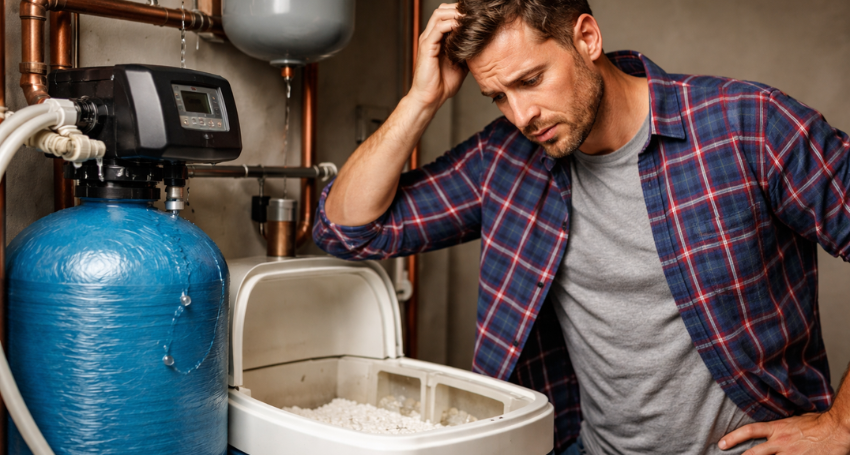
If you’ve recently noticed hard water signs like chalky residue, dry skin, or dull laundry, you might be wondering, why did my water softener stop working? It’s a common issue many homeowners face, and the good news is that most causes are easy to identify and fix.
Understanding what went wrong helps you restore your system quickly and prevent future problems. Let’s walk through the most common reasons your water softener may have stopped working and what you can do about it in this blog
Why Did My Water Softener Stop Working? Common Causes Explained
When your system stops functioning, it usually doesn’t happen without reason. Several components must work together for proper water softening. If one fails, the entire system can suffer.
1. Salt Levels Are Too Low (or Too High)
One of the simplest answers to why my water softener stopped working is improper salt levels.
- Too little salt: The system can’t regenerate properly
- Too much salt: It may cause bridging or clogging in the tank
A salt bridge forms when hardened salt creates a crust, preventing proper dissolution. As a result, your system won’t soften water effectively.
Quick fix:
Check your brine tank regularly and break up any salt bridges using a broom handle or similar tool.
2. Clogged or Dirty Resin Bed
The resin beads inside your softener remove minerals like calcium and magnesium. Over time, these beads can become coated with iron, sediment, or other contaminants.
When that happens, you may again ask, why did my water softener stop working properly?
Signs of resin issues:
- Water still feels hard
- Reduced water pressure
- System regenerates but doesn’t improve water quality.
Solution:
Use a resin cleaner or consider professional servicing to restore performance.
3. Incorrect Settings or Timer Issues
Sometimes, the problem isn’t mechanical; it’s simply incorrect programming.
If your regeneration cycle isn’t running at the right time or frequency, your system won’t function efficiently.
Common issues include:
- Power outages reset the timer
- Incorrect hardness settings
- Manual overrides left unchanged.
Mechanical Problems That Can Cause Failure
If basic checks don’t solve the issue, mechanical components may be at fault.
4. Faulty Control Valve
The control valve directs water flow during regeneration. When it malfunctions, the system cannot properly cycle through its stages.
This often leads homeowners to ask again, why did my water softener stop working suddenly?
Symptoms:
- Continuous running water
- No regeneration cycle
- Unusual noises
Fix:
A faulty valve often requires professional repair or replacement.
5. Blocked Injector or Nozzle
The injector pulls brine into the resin tank during regeneration. If it gets clogged with debris, the process fails.
Result:
Your water softener won’t remove hardness minerals effectively.
Solution:
Cleaning the injector can restore proper function, though this task may require technical knowledge.
6. Worn-Out Parts or Aging System
Like any appliance, water softeners don’t last forever. Over time, internal components wear down.
If your unit is over 10–15 years old, asking why did my water softener stop working might point to simple aging.
Signs of an aging system:
- Frequent repairs
- Declining performance
- Higher maintenance costs
At this stage, replacement may be more cost-effective than ongoing repairs.
Water Supply Issues You Shouldn’t Ignore
Sometimes the problem isn’t inside the softener at all.
7. Changes in Water Pressure
Low water pressure can interfere with regeneration cycles and reduce efficiency.
Possible causes:
- Plumbing leaks
- Clogged filters
- Municipal supply issues
Checking your home’s overall water pressure can help rule this out.
8. High Iron or Sediment Levels
If your water supply contains excessive iron or sediment, it can overwhelm your softener.
This often leads to repeated frustration and the question: Why did my water softener stop working even after maintenance?
Solution:
Installing a pre-filter or iron removal system can protect your softener and improve performance.
How to Prevent Future Water Softener Problems
Prevention always beats repair. By maintaining your system regularly, you can avoid most issues.
Simple maintenance tips:
- Check salt levels monthly
- Clean the brine tank annually.
- Use high-quality salt
- Schedule professional inspections
Consistent care ensures your system runs efficiently year-round.
When to Call a Professional
While some fixes are DIY-friendly, others require expert attention. If you’ve tried basic troubleshooting and still wonder why did my water softener stopped working, it’s time to bring in professionals.
A trained technician can:
- Diagnose hidden issues
- Repair or replace faulty components
- Optimize system settings
Conclusion
If your water softener isn’t performing as it should, you don’t have to figure it out alone. The experienced team at CFWSLLC specializes in diagnosing and resolving water treatment issues quickly and effectively.
Whether you need a simple repair, system maintenance, or a complete upgrade, they provide tailored solutions to keep your water clean and soft. Contact us to restore your system’s performance and enjoy reliable, high-quality water in your home.
By understanding the root causes behind why my water softener stops working, you can take the right steps to fix the issue and prevent it from happening again. A little attention now can save you time, money, and frustration down the road.