
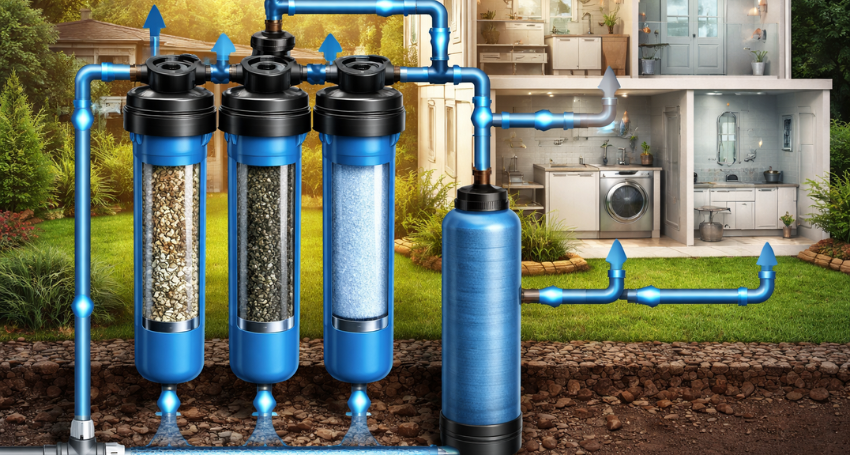
Clean water affects everything from drinking and cooking to bathing and laundry. Many homeowners rely on simple faucet filters or pitcher systems, yet these solutions only treat water at one location. A more comprehensive solution treats water as it enters your home. That leads many homeowners to ask an important question: How Does a Whole House Water Filter Work?
A whole-house filtration system treats all water before it flows through your plumbing system. As a result, every tap, shower, and appliance receives cleaner, safer water. Understanding how this system works can help you decide if it fits your home’s needs in this blog
What Is a Whole-House Water Filter?
A whole-house water filter, often called a point-of-entry filtration system, connects directly to the main water line entering your home. Instead of filtering water at individual faucets, the system purifies water before it reaches any plumbing fixture.
This setup provides several benefits:
- Cleaner drinking and cooking water
- Reduced chlorine and contaminants in showers
- Protection for appliances like dishwashers and washing machines
- Improved taste and odor of water
Because the system treats water at the entry point, it ensures consistent water quality throughout your entire home.
How Does a Whole House Water Filter Work?
To answer the question “How Does a Whole House Water Filter Work?”, it helps to follow the path of water entering your home.
1. Water Enters Through the Main Supply Line
First, water enters your home through the primary supply line from either a municipal source or a private well. The whole-house filtration unit sits directly on this line.
Because of this placement, every drop of water must pass through the filter before reaching sinks, showers, or appliances.
2. Pre-Filtration Removes Larger Particles
Many systems begin with a sediment filter. This stage removes large particles such as:
- Dirt
- Rust
- Sand
- Debris
Removing sediment first protects the rest of the filtration system and improves its efficiency. It also prevents buildup inside plumbing and appliances.
3. Activated Carbon Filters Reduce Chemicals
Next, water flows through an activated carbon filter. Carbon filtration plays a major role in improving water quality.
At this stage, the filter removes or reduces:
- Chlorine
- Chloramine
- Volatile organic compounds (VOCs)
- Unpleasant tastes and odors
Activated carbon works through adsorption. Contaminants cling to the porous carbon surface, which prevents them from continuing through the water supply.
4. Additional Filtration Stages (Optional)
Many advanced systems include additional filtration technologies depending on local water conditions. These stages may include:
KDF media filters – reduce heavy metals such as lead and mercury.
Water softening components – remove hardness minerals like calcium and magnesium.
UV purification – neutralizes bacteria and microorganisms.
Because water quality varies by region, professionals often recommend customized systems that match local water issues.
5. Clean Water Flows Through Your Home
Once the filtration process finishes, clean water travels through the plumbing system to every faucet, shower, and appliance. Since the filtration happens at the entry point, the entire household benefits from improved water quality.
This design explains why many homeowners prefer whole-home filtration instead of multiple smaller filters.
Key Components of a Whole-House Filtration System
Understanding the core components helps clarify how a whole-house water filter works in practice.
Filter Housing
The housing holds the filtration cartridges. It connects directly to the incoming water line and allows technicians to replace filters easily during maintenance.
Filtration Cartridges
Cartridges contain the filtering materials, such as sediment filters or carbon blocks. Each cartridge targets specific contaminants.
Bypass Valve
Most systems include a bypass valve. This feature allows homeowners or technicians to temporarily divert water around the filter during maintenance or repairs.
Pressure Relief Valve
A pressure relief valve protects the system and plumbing from pressure buildup. This component ensures safe operation and prolongs system life.
Why Homeowners Choose Whole-House Filtration
Many homeowners search for answers to “How Does a Whole House Water Filter Work?” because they want better water quality throughout their homes.
Here are some key reasons people install these systems:
Better Water for Everyday Use
Filtered water improves the taste of drinking water and enhances cooking quality. It also reduces chemical exposure during showers and baths.
Longer Appliance Lifespan
Hard water minerals and sediment can damage appliances. Filtration reduces buildup, which helps dishwashers, water heaters, and washing machines last longer.
Healthier Skin and Hair
Chlorine and chemicals in water may irritate skin and dry hair. Filtered water creates a more comfortable bathing experience.
Cleaner Plumbing
Removing sediment and contaminants helps protect pipes and fixtures from corrosion and buildup.
Maintenance and Filter Replacement
Although whole-house filtration systems operate automatically, they still require periodic maintenance. Most systems need filter replacements every 3 to 12 months, depending on water quality and household usage.
Regular maintenance ensures optimal filtration performance and extends system life.
Professional inspections can also identify local water issues and recommend upgrades if necessary.
Conclusion
Now that you understand how a whole-house water filter works, it becomes clear why so many homeowners choose this solution. A well-designed filtration system protects your plumbing, improves water taste, and supports healthier everyday living.
If you want cleaner water throughout your entire home, the experts at CFWSLLC can help. Their team evaluates your water quality and recommends the right filtration system for your specific needs. Whether you want to reduce chlorine, remove sediment, or improve overall water purity, professional guidance ensures you get the most effective solution. Contact us to learn more about whole-home filtration systems and discover how you can upgrade your home’s water quality today.