
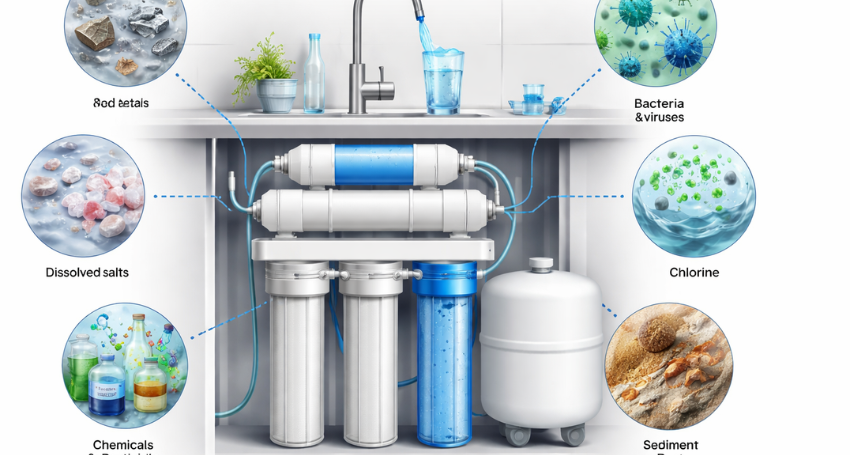
Clean, safe water is essential for every home. Yet many homeowners still ask the same important question: What Does a Reverse Osmosis System Remove? If you’re considering upgrading your water filtration system, understanding exactly what reverse osmosis (RO) removes can help you make an informed decision.
At CFWS LLC, water quality is more than just a service; it’s a commitment to protecting your home and your family. Let’s break down, in this blog, how reverse osmosis works and what it actually filters out of your water supply.
What Does a Reverse Osmosis System Remove?
A reverse osmosis system uses a semi-permeable membrane to filter out contaminants at the molecular level. Unlike standard carbon filters, RO systems push water through an ultra-fine membrane that blocks impurities while allowing clean water to pass through.
So, what does a reverse osmosis system remove from your drinking water?
1. Dissolved Solids (TDS)
Reverse osmosis systems significantly reduce Total Dissolved Solids (TDS), which include:
- Calcium
- Magnesium
- Sodium
- Potassium
Although some minerals occur naturally, high TDS levels can affect taste, cause scale buildup, and reduce appliance efficiency. RO systems help create cleaner-tasting, low-mineral water ideal for cooking and drinking.
2. Heavy Metals
One of the biggest benefits of reverse osmosis involves heavy metal removal. An RO membrane can reduce:
- Lead
- Arsenic
- Mercury
- Cadmium
- Chromium
These contaminants may enter water supplies through aging plumbing or environmental runoff. Even small amounts pose health risks, especially for children. Therefore, installing a properly designed RO system provides peace of mind.
3. Chlorine and Chloramine
Municipal water treatment facilities often use chlorine or chloramine to disinfect water. While effective for sanitation, these chemicals can:
- Affect taste and odor
- Irritate skin
- Damage plumbing fixtures over time
Most reverse osmosis systems include pre-carbon filters that reduce chlorine and chloramine before water reaches the RO membrane.
4. Fluoride
Many homeowners ask whether reverse osmosis removes fluoride. The answer is yes. Unlike standard carbon filtration, RO systems can significantly reduce fluoride levels. This makes reverse osmosis a popular choice for families seeking more control over their water content.
5. Nitrates and Nitrites
Agricultural runoff and fertilizers can introduce nitrates into groundwater. High nitrate levels can be harmful, especially for infants. Fortunately, reverse osmosis effectively removes nitrates and nitrites from drinking water.
6. Bacteria and Some Viruses
Although reverse osmosis systems are not marketed as primary disinfection devices, their ultra-fine membranes can block many bacteria and certain viruses. However, pairing an RO system with UV purification enhances protection even further.
How Reverse Osmosis Improves Water Quality
Understanding what a Reverse Osmosis System removes is only part of the equation. The real benefit lies in how it improves daily life.
Better Taste and Odor
Once contaminants and chemicals are removed, water tastes cleaner and fresher. Coffee, tea, soups, and other recipes benefit immediately.
Appliance Protection
Reduced mineral content means less scale buildup in:
- Ice makers
- Dishwashers
- Coffee machines
As a result, appliances last longer and operate more efficiently.
Healthier Cooking and Drinking
When you remove heavy metals, nitrates, and unwanted chemicals, you reduce long-term exposure risks. Clean water supports overall wellness.
What Reverse Osmosis Does NOT Remove
While RO systems are powerful, they do not remove everything without proper configuration. For example:
- Some volatile organic compounds (VOCs) require carbon filtration.
- Certain microorganisms may require UV treatment.
That’s why professional system design matters. A customized water treatment plan ensures your system targets the specific contaminants present in your water supply.
Is Reverse Osmosis Right for Your Home?
Every home’s water quality differs. Private well water often contains iron, sulfur, or bacteria. Municipal water may contain chlorine, fluoride, or trace heavy metals.
Therefore, before choosing a system, testing your water is essential. A professional water analysis identifies exactly what contaminants are present. Then, a properly sized and configured reverse osmosis system can address those concerns effectively.
At CFWSLLC, specialists evaluate your water source, household usage, and filtration goals before recommending a solution. This approach ensures optimal performance and long-term reliability.
Why Professional Installation Matters
Although some homeowners attempt DIY installations, a professional setup provides several advantages:
- Correct water pressure calibration
- Leak prevention
- Proper membrane selection
- Long-term system efficiency
A poorly installed unit can reduce filtration performance and increase water waste. By contrast, expert installation maximizes both effectiveness and lifespan.
Additionally, regular maintenance, including filter and membrane replacement, keeps your system operating at peak performance. Routine service protects your investment and ensures continued water purity.
The Bottom Line: What Does a Reverse Osmosis System Remove?
To summarize, What Does a Reverse Osmosis System Remove? It removes:
- Dissolved solids
- Heavy metals like lead and arsenic
- Chlorine and chloramine
- Fluoride
- Nitrates
- Many bacteria and contaminants
In short, reverse osmosis delivers cleaner, safer, and better-tasting water for your home.
If you’re concerned about your water quality or simply want the highest level of filtration available, a professionally installed reverse osmosis system may be the right solution.
Ready for Cleaner Water?
Clean water shouldn’t be a guessing game. If you’re wondering whether reverse osmosis is right for your home, the experts at CFWS LLC are here to help. Schedule a professional water test and consultation
Conclusion
So, What Does a Reverse Osmosis System Remove? It removes many of the most common and concerning contaminants found in today’s water supplies, including dissolved solids, heavy metals like lead and arsenic, chlorine, fluoride, nitrates, and other unwanted impurities. As a result, your home benefits from cleaner, better-tasting, and safer water every day.
More importantly, reverse osmosis gives you confidence. Instead of wondering what may be in your tap water, you gain control over its quality. When professionally designed and maintained, an RO system provides reliable, long-term performance that protects both your health and your plumbing.
If you’re ready to improve your water quality, the team at CFWSLLC can help you take the next step. Schedule a water test and personalized consultation to determine whether reverse osmosis is the right solution for your home. Cleaner water starts with the right system and the right experts behind it. Contact us today