
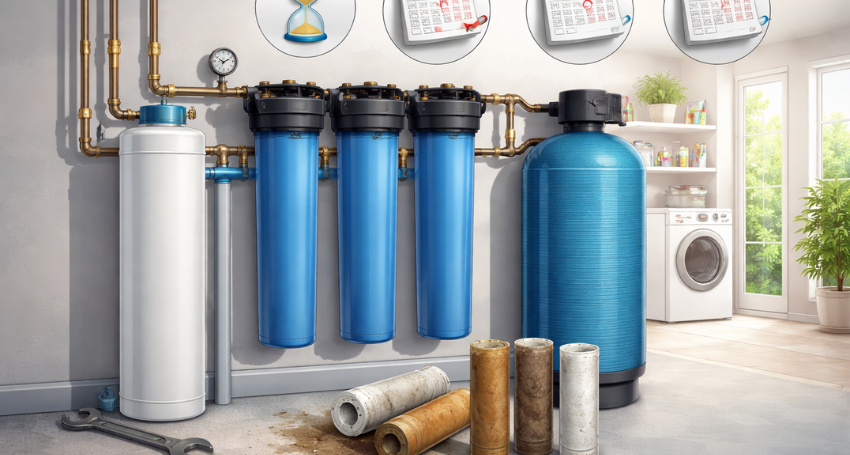
If you’ve invested in a whole-house filtration system, you’re already committed to cleaner, safer water for your home. However, one question homeowners often ask is: How Long Do Whole House Water Filters Last?
The answer depends on several important factors, including the type of filter, water quality, and household usage. Understanding the lifespan of your system not only protects your investment but also ensures your family continues to enjoy high-quality water every day in this blog.
Let’s break it down clearly so you know exactly what to expect.
How Long Do Whole House Water Filters Last?
On average, whole-house water filters last between 3 months and 5 years, depending on the type of filtration media used. Each component of the system has its own replacement timeline.
Here’s a general guide:
1. Sediment Pre-Filters (3–6 Months)
Sediment filters trap dirt, sand, and rust particles. Because they handle heavy debris, they typically need replacement every 3 to 6 months. Homes with well water or high sediment levels may need more frequent changes.
If ignored, clogged sediment filters can restrict water pressure and strain your system.
2. Carbon Filters (6–12 Months)
Carbon filters remove chlorine, odors, and many chemicals. Most last between 6 and 12 months, depending on water usage and contaminant levels.
When carbon media becomes saturated, it stops absorbing contaminants effectively. At that point, your water may start to taste or smell different.
3. High-Capacity Tank Systems (3–5 Years)
Larger backwashing carbon tanks or specialty media systems can last anywhere from 3 to 5 years. These systems automatically flush contaminants out during regeneration cycles, which extends their lifespan.
However, even these systems require professional inspection to maintain peak performance.
What Affects Filter Lifespan?
Although averages help, several factors influence how long your system will actually last.
Water Quality
Water with high sediment, chlorine, iron, or sulfur levels causes filters to work harder. The more contaminants present, the faster the filter media becomes exhausted.
A professional water test can determine what your system is dealing with.
Household Water Usage
Naturally, a household of five will use more water than a household of two. Higher water consumption shortens filter lifespan because more water flows through the media daily.
Type of Filtration System
Not all whole-house systems are the same. Cartridge-based systems require manual replacement more often, while backwashing systems maintain themselves longer through automatic cleaning cycles.
At CFWSLLC, systems are designed around your home’s specific water conditions, which helps extend filter life and boosts efficiency.
Signs Your Whole House Water Filter Needs Replacement
Even if you track replacement dates carefully, it’s important to watch for performance changes. Fortunately, your home will usually give you clear signals.
Reduced Water Pressure
If water pressure drops throughout your home, a clogged sediment filter could be the cause.
Change in Taste or Odor
When carbon filters become saturated, chlorine taste and unpleasant odors may return.
Visible Sediment
If you notice particles in your water, your filter may no longer be functioning properly.
Staining or Discoloration
An iron or mineral breakthrough can lead to staining in sinks, tubs, or laundry.
If you experience any of these issues, it’s wise to schedule a professional inspection promptly.
Why Timely Replacement Matters
Some homeowners delay filter replacement to save money. However, postponing maintenance often leads to bigger problems.
First, clogged filters restrict water flow, which strains plumbing and appliances. Over time, this can reduce the lifespan of water heaters, dishwashers, and washing machines.
Second, exhausted filters allow contaminants to pass through untreated. This defeats the purpose of installing a whole-house filtration system in the first place.
Most importantly, consistent maintenance protects your family’s water quality. Clean water supports healthier skin, better-tasting food, and safer drinking water throughout your home.
Professional Maintenance vs. DIY Replacement
While some cartridge filters are simple to replace, many whole-house systems require proper calibration and inspection. A professional technician can:
- Check water pressure levels
- Inspect O-rings and seals.
- Ensure correct installation
- Test the water quality after replacement
Routine service extends system lifespan and prevents unexpected failures.
If you’re unsure how long your system has been in place, a professional evaluation provides clarity and peace of mind.
How to Extend the Life of Your Whole House Water Filter
Fortunately, you can take proactive steps to get the most from your system:
- Schedule annual water testing
- Replace pre-filters on time.
- Monitor water pressure regularly
- Invest in a properly sized system.
Most importantly, work with experienced water filtration specialists who understand local water conditions.
Conclusion
So, How Long Do Whole House Water Filters Last? The honest answer depends on your system and water quality. However, with proper maintenance and professional guidance, you can expect reliable performance for years.
If you’re unsure about your filter’s condition or timeline, the experts at CFWSLLC can help. Their team evaluates your current system, recommends precise replacement schedules, and ensures your home receives consistent, high-quality water.
Clean water shouldn’t be a guessing game. Contact us to schedule a consultation and keep your whole house filtration system performing at its best. Maintaining your system properly ensures that your investment continues to protect your home, your plumbing, and your family’s health. When you understand how long whole-house water filters last, you stay in control of your water quality, and that makes all the difference.